Frequently Asked Questions: RTT® and Hypnosis

What is Rapid Transformational Therapy (RTT®)?
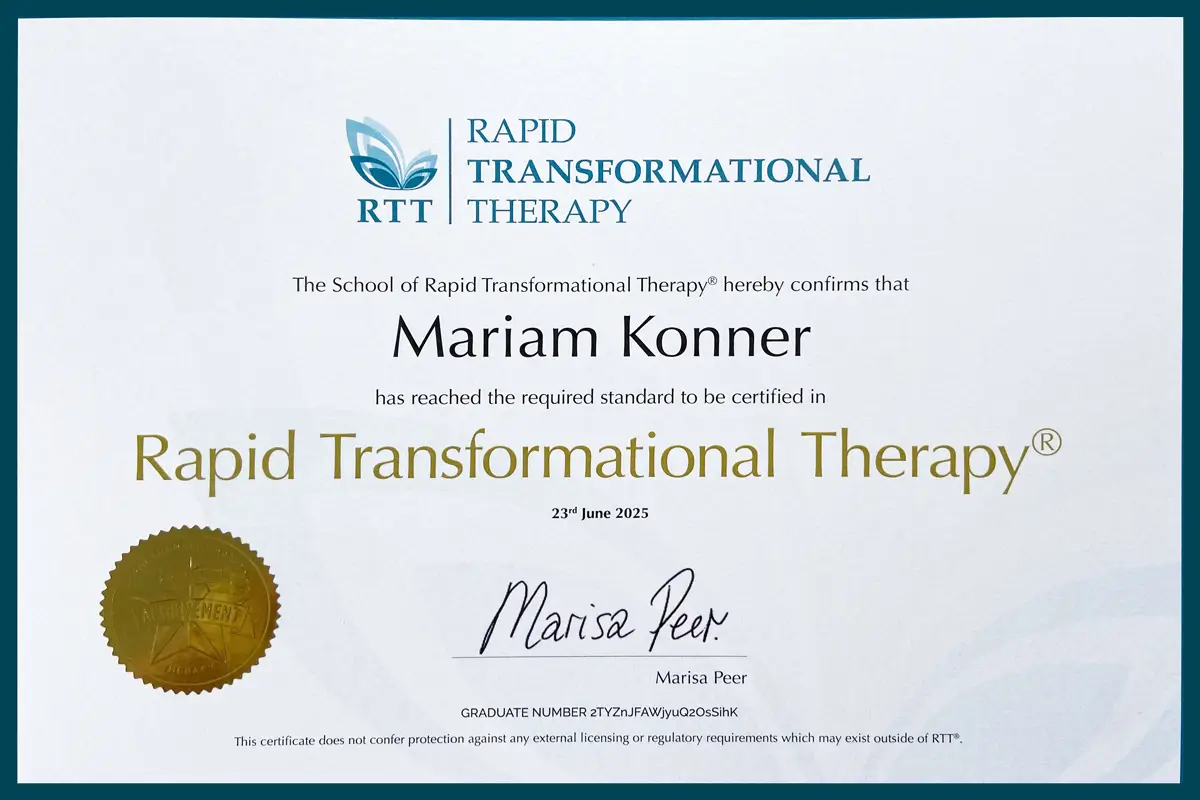
RTT® was developed by Marisa Peer, combining hypnotherapy, cognitive behavioral therapy (CBT), neuroscience approaches, and other psychological methods.
It integrates proven techniques into a structured process.
The aim: examine personal patterns clearly and develop reflected ways to address them.
Life forms beliefs and inner patterns that shape thinking, feeling, and behavior – often unconsciously from early experiences.
RTT® uses guided relaxation to help notice these connections more consciously and reframe personal experiences.
Core process elements:
- Reflection: Explore backgrounds of recurring themes or reactions.
- Reframing: View experiences in new contexts for nuanced understanding.
- Integration: Supportive tools to help you integrate new perspectives into your daily life.
You receive a personalized audio recording for ongoing reflection between sessions.
RTT® blends hypnotherapy with structured dialogue to foster clearer pattern recognition and fresh approaches.
Ready for a change?
Hypnosis: A State of Focused Attention
Heightened concentration with inner clarity. Hypnosis creates a natural mindset of intense focus and relaxed awareness, making it easier to explore subconscious patterns, beliefs, and habits.
Most people find it deeply relaxing and pleasant. Your attention turns inward while everyday distractions fade naturally.
Full control at every moment. You stay alert, communicative, and able to act throughout – there’s no loss of agency.
Proven therapeutic tool for decades.
Used across clinical settings, hypnosis sharpens insight into emotional triggers and supports fresh ways to handle challenges. Individual responses vary widely.
Hypnosis gets misunderstood often. It’s simply a natural state of focused attention – many find it deeply relaxing, like getting lost in a great book.
Your awareness turns inward, making it easier to notice subconscious beliefs, habits, and emotional patterns.
Myths abound –let’s clear them up. Here’s transparent insight on the most frequent questions and misconceptions.
Focused attention with inner clarity. Hypnosis shifts awareness inward – external distractions fade as concentration deepens.
Most experience it as calm and centered. This mindset makes it easier to examine subconscious beliefs, habits, and emotional patterns with fresh perspective.
Rather than surface-level thinking alone, you engage your full inner experience.
The aim: uncover new ways to navigate longstanding patterns.
Results vary by individual.
Experiences vary widely.
Some notice a floating lightness, others deep calm and laser focus. Many compare it to that drowsy pre-sleep haze or total immersion in a gripping novel.
Full awareness throughout. You stay alert, responsive, and free to move or speak anytime – you are never ‘stuck’ in a trance.
Not sleep, not mind control. Hypnosis thrives on your willing engagement and active participation.
Decades of clinical use confirm it.
Hypnosis has proven reliable across therapeutic settings when delivered professionally.
Complete control remains yours. You stay fully alert, responsive, and free to speak, move, or stop anytime.
No mind control or surrender. It relies on your active consent and engagement – not manipulation.
Individual depth varies.
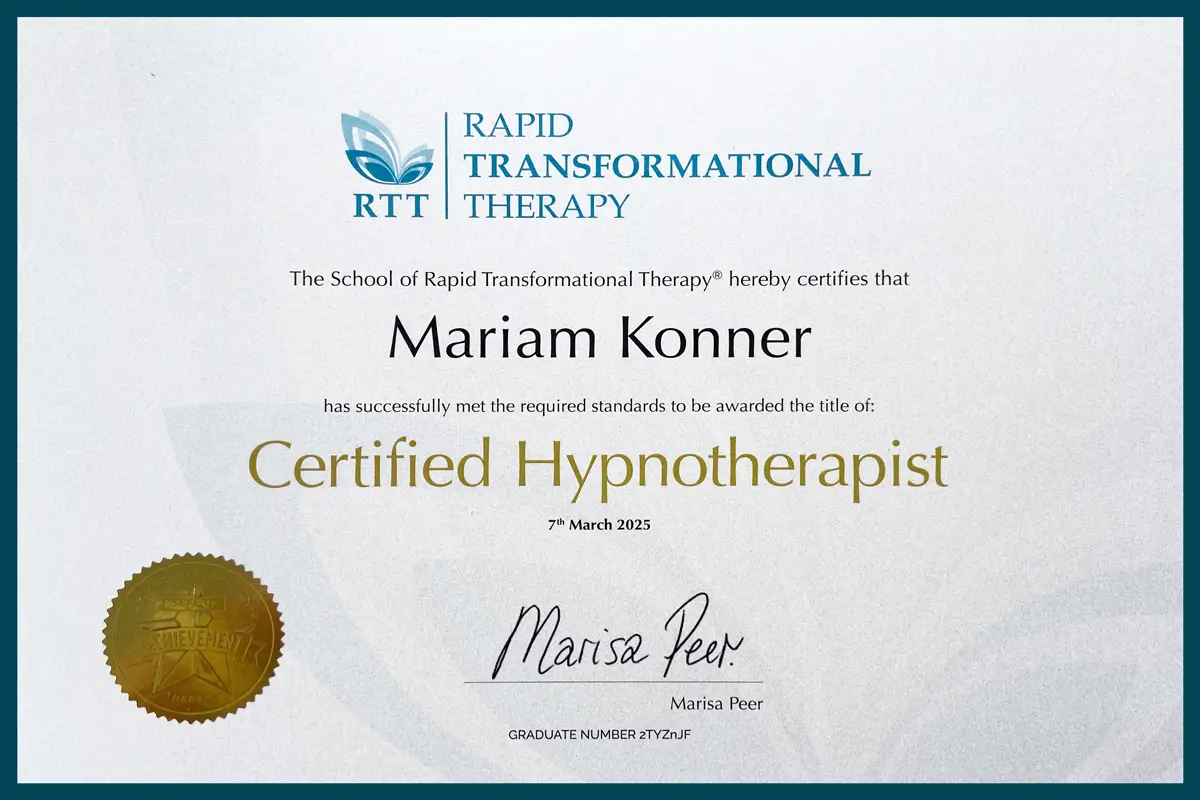
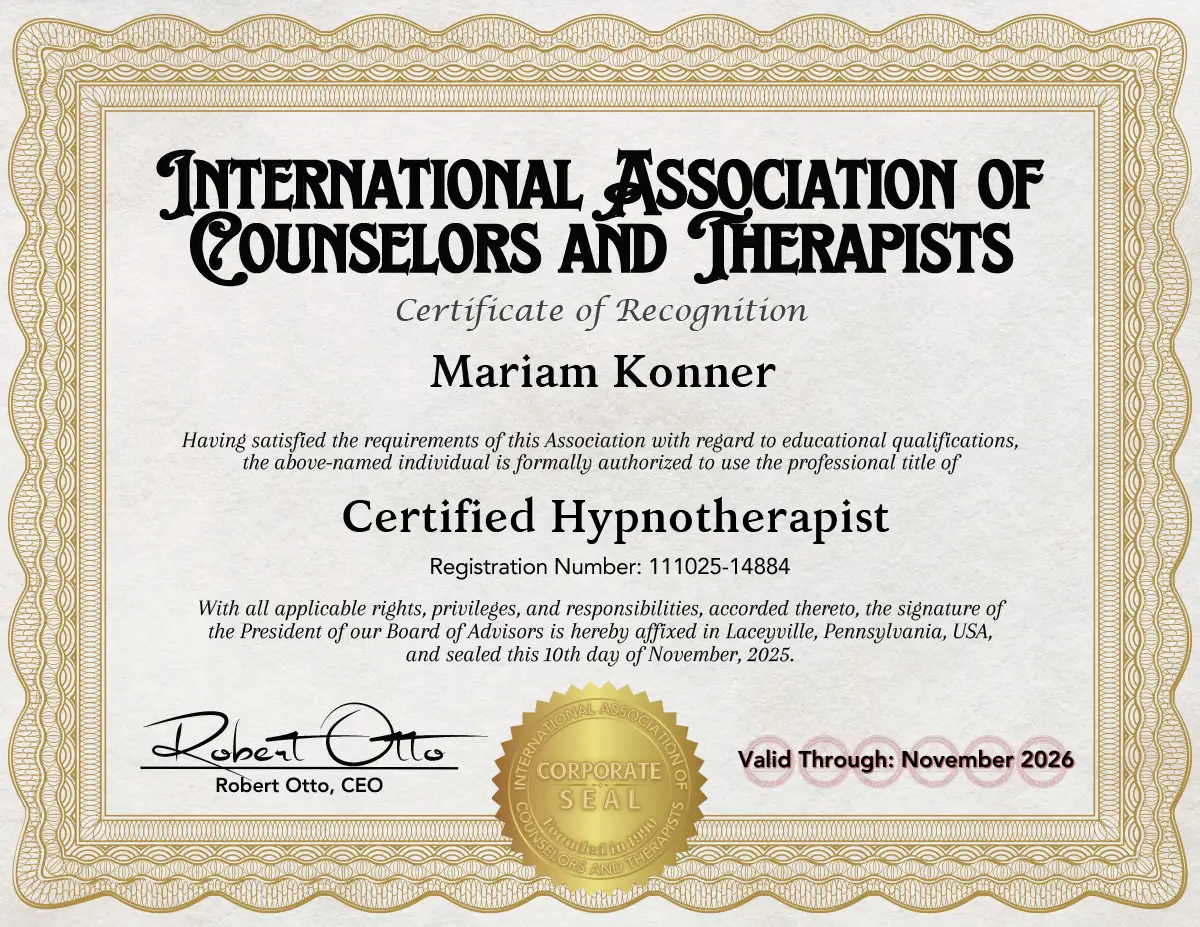
As a physician (medical doctor), I ensure that the method is applied ethically, safely, and to the highest professional standards.
Most people can access focused attention states. Depth and experience vary widely by individual – perfectly normal.
Not extraordinary – purely familiar. Like everyday daydreaming or losing yourself in a book.
Key disclaimer:
Hypnosis and RTT® aren’t universal fits. Certain neurological or psychiatric conditions may contraindicate use. Professional assessment determines suitability.
Still Have Questions?
I’m here to address your concerns personally in a complimentary call.